Where Every Mission Begins: Our UK Operations Hub
Every repatriation we carry out starts long before a plane leaves the runway. At AD Medical Air Assist, each mission begins at our UK office, where David and our coordination team carefully build a plan around one simple goal: bring every patient home safely, smoothly and with dignity.
From this central hub we:
- Take new enquiries from families, hospitals, insurers and assistance companies
- Gather and interpret detailed medical information
- Decide the safest mode of transport and the right escort team
- Design routes, arrange flights and coordinate ground ambulances
- Prepare the medical equipment and documentation needed for the journey
Nothing is left to chance. Whether we are collecting a patient from mainland Europe or arranging a complex, multi‑leg transfer from the other side of the world, the preparation always starts at the same place: our desks in the UK, with a blank plan that we fill in step by step.
Step 1: The First Call – Understanding the Situation
Most families contact us during one of the most stressful moments of their lives: a loved one has fallen seriously ill or been injured abroad, and they need to get them home.
During that first conversation, our team will:
- Listen carefully to what has happened and what worries you most
- Confirm where the patient is, what treatment they are receiving and who is in charge of their care
- Establish where the patient needs to go, and how quickly
- Identify any obvious red flags or risks that could affect travel
We then explain, in clear terms:
- What types of transfer might be suitable (seated medical escort, stretcher on commercial flight, or air ambulance)
- What information we need from the hospital to make a safe clinical plan
- Rough timeframes for how quickly we can move once approvals are in place
This first call is about turning panic into a plan. By the end of it, you know what happens next and who will do what.
Step 2: Gathering Medical Details and Confirming Fitness to Fly
Once we understand the broad picture, we move straight into clinical detail. Safe repatriation depends on having a complete, up‑to‑date medical overview.
From the treating hospital or clinic we typically request:
- Recent medical and nursing notes
- Diagnosis and current treatment plan
- Full medication list and allergy information
- Latest observations and vital signs
- Laboratory results and any relevant scans
- Operative notes for any recent surgery
- Contact details for the sending and receiving doctors
Our clinical leads review this information to decide:
- Is a commercial flight with a medical escort safe, or is an air ambulance required?
- Is the patient able to travel seated, or do they need a stretcher?
- What level of escort is necessary – nurse, paramedic, doctor, or a combination?
- Are there special needs such as high‑flow oxygen, infection control precautions, complex wound care or behavioural support?
If anything is unclear, we speak directly to the treating team. No booking is confirmed until we are clinically satisfied that the chosen mode of transport is safe for that particular patient.
Step 3: Building the Right Escort Team
With the clinical requirements agreed, we assemble the team that will travel with the patient.
Matching skills to the case
Depending on the situation, we may assign:
- A registered nurse with acute or critical care experience
- A paramedic with advanced pre‑hospital and transport skills
- A physician for higher‑acuity or complex cases
- In certain situations, a specialised neonatal or paediatric clinician
We look closely at:
- The underlying condition and possible complications
- The length and complexity of the journey
- Any requirement for advanced interventions or rapid decision‑making in flight
Language and cultural expertise
Many of our missions involve non‑English‑speaking countries. Wherever possible, we deploy escorts who:
- Speak the local language or the family’s first language
- Understand local healthcare systems and cultural norms
- Can act as a bridge between foreign hospital teams and UK services
We also have access to language specialists and interpreters when needed, ensuring nothing is lost in translation at crucial moments.
Managing fatigue and resilience
Long‑haul missions can involve multiple flights, time zones and overnight travel. We plan escort schedules with rest and safety in mind. For particularly demanding journeys, we may send two escorts so they can share responsibilities and maintain consistently high standards of care from start to finish.
Step 4: Designing the Journey – Flights and Ground Transfers
Next, our UK operations team turns the clinical plan into a logistical route.
Choosing the right flights
We carefully review:
- Whether a direct flight is possible and clinically preferable
- Flight times that align with hospital discharge and admitting times at the destination
- Airlines with policies and experience that support medical escorts, stretchers and medical equipment
For stretcher missions or complex medical needs, we work with airline medical departments to:
- Complete and submit medical forms and fitness‑to‑fly documentation
- Arrange stretcher installations or special seating layouts where required
- Obtain approval for medical equipment and any in‑flight oxygen needs
- Agree boarding and disembarkation procedures for the patient and escort
Coordinating ground transport
At the same time, we arrange:
- Ambulance or wheelchair‑accessible transport from the sending facility to the departure airport
- Any intermediate transfers if there are unavoidable connections
- Ambulance or appropriate medical transport from the arrival airport to the receiving hospital, clinic or home
Our aim is always the same: true bedside‑to‑bedside care. The patient is never left to navigate any part of the journey alone.
Step 5: Preparing Equipment and Medications
Each escort travels with a tailored set of equipment and medications, effectively turning the journey into a moving extension of the patient’s care.
Equipment
Depending on the case, we prepare:
- Monitoring equipment (blood pressure, pulse oximetry, sometimes portable ECG)
- Oxygen delivery systems and backup supplies
- Suction and airway support devices
- Infusion pumps where intravenous therapy is needed
- Manual handling aids, positioning supports and pressure‑relief materials
- Essential consumables such as dressings, syringes, cannulas and PPE
Everything is checked for:
- Airline and aviation compliance
- Safety and reliability
- Suitability for the full length of the journey and potential delays
Medications
Medication planning is equally detailed:
- Routine medications are scheduled around flight times and time zones
- Additional drugs are included to manage pain, nausea, anxiety, breathlessness and other likely symptoms
- Emergency medications are added in case of unexpected deterioration
We always carry more than the bare minimum to allow for delays, diversions or changes in schedule.
Step 6: Preparing Patients and Families
Before the escort ever reaches the bedside, we spend time preparing patients and families from our UK office.
We provide:
- A clear outline of the journey in plain language
- A step‑by‑step description of what will happen from discharge to arrival
- Practical guidance on luggage, documents and personal items
- Answers to common worries about airports, security checks and what happens on board
If there are language or cultural differences, we use bilingual staff or interpreters to make sure nothing is misunderstood. We also prepare the patient emotionally, explaining:
- That the escort will be with them throughout
- How they will be moved and positioned
- How often they will be checked and supported during the flight
This preparation often transforms anxiety into trust and confidence.
Step 7: Deployment – From UK Planning to Global Bedside
When mission day arrives, all the preparation is put into practice.
Our escort:
- Travels to the patient’s location anywhere in the world
- Meets the patient and family face‑to‑face
- Performs a pre‑flight assessment to confirm stability and suitability to travel
- Checks medications, equipment and paperwork one last time
- Works with the local team to coordinate a safe discharge
From that point on, the escort does not leave the patient’s side.
Step 8: Airport, Boarding and In‑Flight Care
At the airport, the escort:
- Oversees transfer from hospital transport into the terminal
- Manages check‑in, special assistance and security procedures
- Communicates with airline staff about seating, stretchers and equipment
- Ensures the patient is carefully moved into position on the aircraft
Once in the air, their focus is entirely on the patient:
- Monitoring vital signs and clinical condition
- Administering medications and adjusting care as needed
- Managing pain, breathlessness, nausea and anxiety
- Supporting mobility where appropriate, and maintaining comfort and dignity
- Anticipating and responding to any change in condition
If the unexpected happens, the escort is ready, with the training and equipment to act quickly and calmly.
Step 9: Arrival, Transfer and Final Handover
When the aircraft lands, the mission enters its final stage.
The escort:
- Oversees the transfer off the plane and into the waiting ambulance or vehicle
- Guides the patient through any arrival and immigration processes
- Accompanies them to the receiving hospital, clinic or home
On arrival, they provide a structured handover:
- Sharing key clinical observations from the journey
- Passing on all documentation and medication details
- Ensuring the patient is safely settled and the receiving team has everything they need
Only when these steps are complete do we consider the mission finished.
A Recent Mission with Lia’s Wings: Bringing a Tiny Warrior Home
One of our most meaningful recent missions shows exactly what this preparation and teamwork look like in real life.
We were honoured to work alongside Lia’s Wings, a remarkable charity specialising in paediatric and neonatal repatriation, to bring home a baby boy who arrived far earlier than anyone expected – at just 26 weeks’ gestation, in a foreign country, far from home.
His parents had never imagined facing intensive neonatal care in another language, away from family and familiar surroundings. They were living through every parent’s nightmare: fear, uncertainty and heartbreak, amplified by distance and isolation.
Lia’s Wings stepped in to support the family, not just with logistics and funding, but with reassurance, guidance and constant emotional support. When we were invited to be the medical transport partner for this mission, the decision to help was immediate.
From our UK office, David and the team:
- Worked closely with Lia’s Wings to understand every detail of the baby’s condition
- Liaised with neonatal specialists in both the sending and receiving hospitals
- Arranged a highly specialised neonatal escort team with the right skills and experience
- Coordinated ground ambulances, flight bookings and equipment specific to such a tiny, fragile patient
On the day of transfer, our neonatal clinicians – including Darren, who led the escort – put that planning into action. Their expertise, calmness and compassion were extraordinary. They managed every stage of the journey with meticulous care: from incubator handover and airway management to in‑flight monitoring and temperature control.
This mission was not just about moving a patient. It was about giving a family their baby back in the country they call home, surrounded by their support network and the healthcare system they know.
When the aircraft touched down and the transfer was safely completed, it felt like far more than a successful repatriation. It was a celebration of courage, resilience and true teamwork:
- The courage of parents who had faced months of fear and uncertainty
- The resilience of a tiny fighter who had already overcome so much
- The dedication of neonatal teams, ambulance crews, Lia’s Wings and our own clinicians, all working together for one small life
To that little boy’s parents: thank you for trusting us with such a personal and emotional journey. To Lia’s Wings: it is a privilege to stand alongside an organisation that delivers hope to families when they need it most. And to Darren and the neonatal team: you made us incredibly proud.
Welcome home, little one. Your story has only just begun – and we are honoured to have played a small part in the first chapter.
At AD Medical Air Assist, this is what every mission is about: detailed preparation, expert clinical care and genuine human compassion, all starting in our UK office and reaching patients and families wherever in the world they may be.
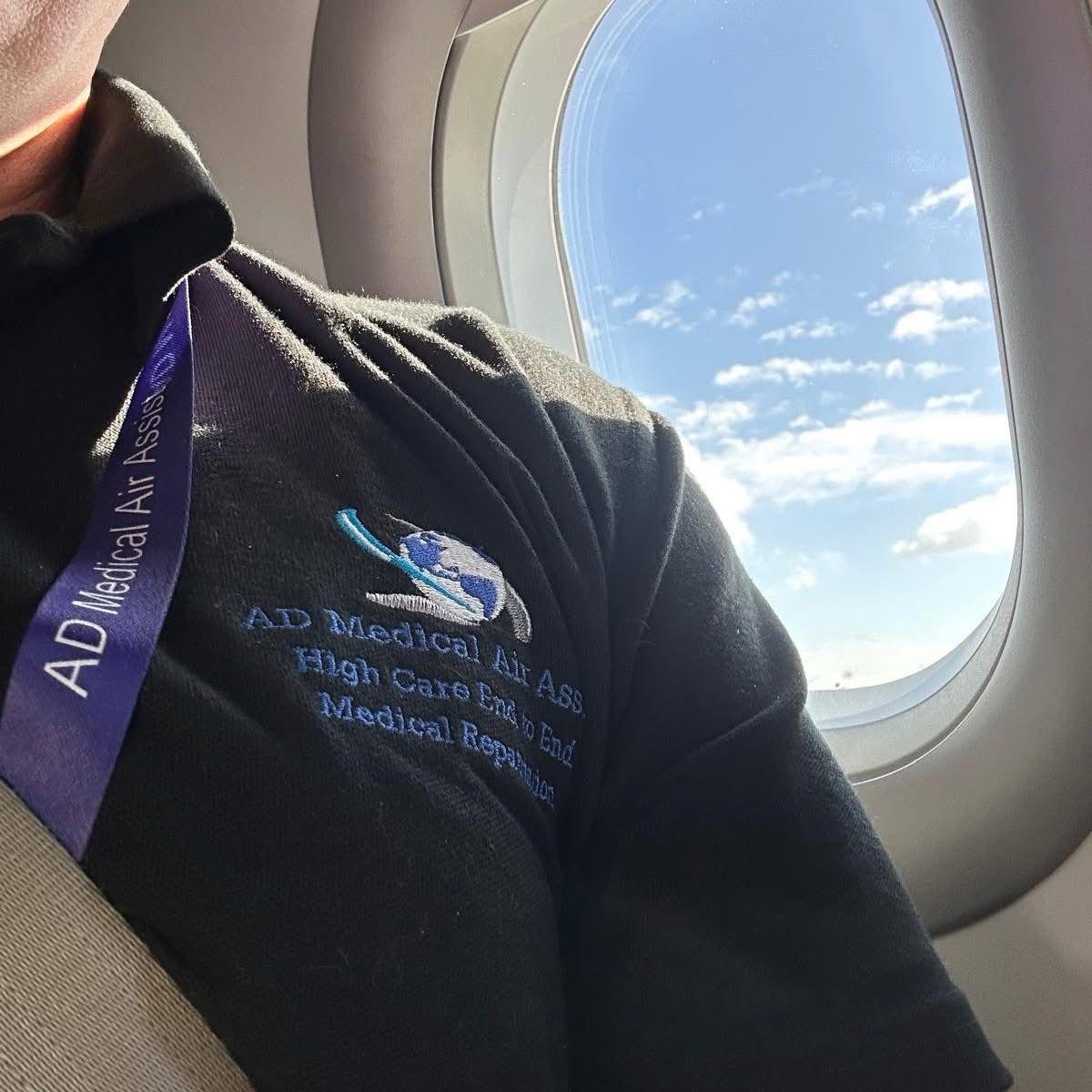
 AD Medical Air Assist